

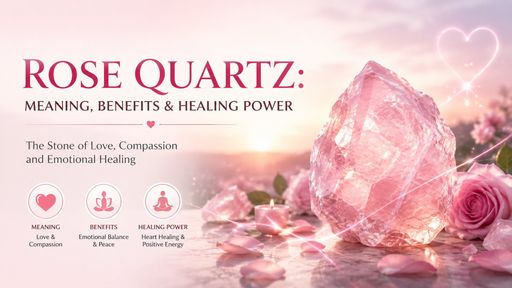
Without a doubt rose quartz is the most popular crystal around the world. The blush pink tone and healing qualities have won over the hearts of spiritually motivated souls, crystal experts and interior designers around the world for centuries. If you're a beginner or an expert with crystal knowledge, exploring rose quartz meaning and their powerful healing benefits and uses might be your key to deeper self awareness and emotional harmony, opening the door to universal love. We’ve got you covered here – from geological origins to uses in everyday life!
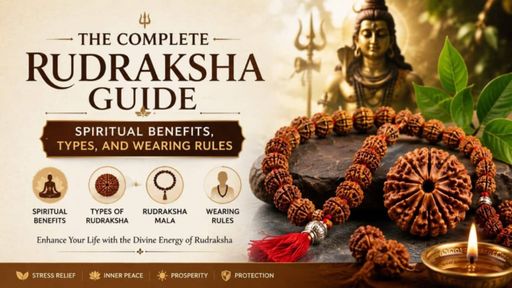
There is a reason why people stop and hold a Rudraksha bead in their hand when it is presented to them. When you can feel the texture in your palm and realize its uniqueness it doesn’t take much convincing why it is regarded as a precious object for so long. Many people who have been wearing Rudraksha for years speak of peace and stability though of course this will be unique for each individual. But most of the ‘guides’ about Rudraksha start in the wrong place - and talk about myths before even considering why someone living in the modern day might want to wear one. So here goes.
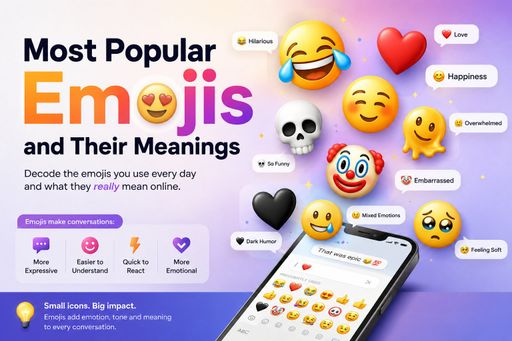
Think about the last few messages you sent today. There’s a pretty good chance at least one emoji showed up somewhere in the conversation.
That’s just how online communication works now.
People use emojis almost without thinking anymore. A laughing face replaces a full reply. A heart reacts faster than words. Even random symbols somehow make complete sense depending on the situation.
And honestly, it’s kind of interesting how much these tiny icons changed internet conversations.
Years ago, emojis were just simple additions to text messages. Now they carry emotions, sarcasm, jokes, reactions, and even internet slang. Some emojis still mean exactly what they originally meant. Others completely changed because of social media culture.
Take the 💀 skull emoji for example.
Technically, it represents death.
But online? Most people now use it when something feels painfully funny or unbelievably embarrassing.
That’s the strange thing about internet culture meanings evolve constantly.
In this guide, we’re breaking down the most popular emojis and their meanings, including the hidden meanings behind trending emojis people use daily on Instagram, TikTok, WhatsApp, Snapchat, and other social media platforms.
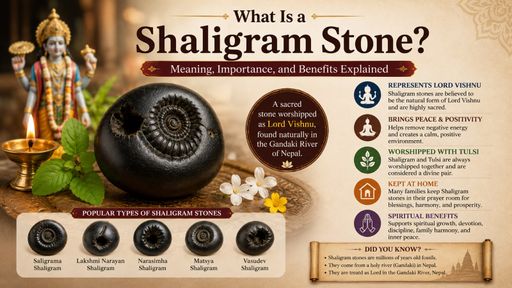
What Is a Shaligram?
This Is the One Thing People Are Getting Wrong About the Stone
Step into almost any Hindu household in India or Nepal, and at one corner where the worship place is situated, most often near a Tulsi plant along with maybe some water, you'll see a small, black, and peculiarly round stone. Not much else about it catches the eye. That's the idea behind it.
This is a Shaligram. And if this is the first time that you have come across this name, don't worry because you certainly aren't the only one to be unaware about this religious practice.
But what exactly is it?
Well, it's important to know that the Shaligrams aren't sculpted by anyone. They are not made artificially. Instead, they are formed naturally through millions of years of development and erosion at the bottom of the Gandaki River in Nepal. In geological terms, Shaligrams are fossilized remains of ammonites, a prehistoric oceanic species long extinct. But the process of formation doesn't end there. The river itself shapes and polishes the stones, adding unique spirals along the surface.
This natural formation is crucial to understand the meaning of a Shaligram. In Hindu mythology, Lord Vishnu – who is responsible for keeping order in the world – is believed to reside within the Shaligram not symbolically but literally. In other words, the stone is believed to represent the real God himself. It's not an imitation of Vishnu; instead, it is Vishnu. That's why no one carves Shaligrams or creates them manually.
Every Shaligram is unique in appearance, with some having circular marks known as chakras, others having hollows or deep spiral marks on their surface. According to believers, each of these marks indicates what particular manifestation of Vishnu each stone represents.
Why The Gandaki River In Particular?
It’s one of those little pieces of information people often forget about, but it’s important. The Gandaki River, also known as Kali Gandaki, is located in a particular part of Nepal where there is a very high density of ammonite fossils. In fact, there are so many that you’ll find them at the bottom of the river.
For this reason, true Shaligrams will only come from this river. Any other claim should be doubted.

Out of nowhere, certain terms flood your screen until they’re all you see. Take PFP - chances are, you’ve come across it before, even if you didn’t notice at first. It spreads fast, like a whisper turning into noise. One day it's invisible, the next it’s on every page. Spotting it feels like catching a signal everyone else has already decoded.
"Nice PFP!"
"Change your PFP."
"Matching PFPs?"
"That anime PFP looks cool."
Truth is, plenty of folks pretend they know what PFP stands for when they really don’t. Surprisingly often, someone nearby has already searched it online. Actually understanding it goes way beyond looking up a meaning.
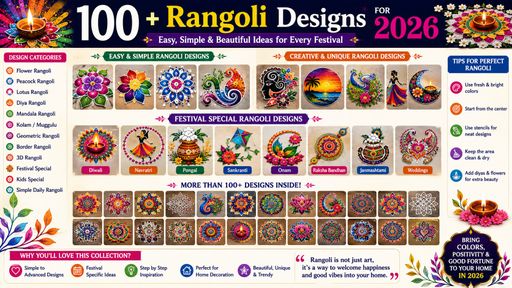
There are probably very few traditions as old as Rangoli in the Indian household. It may appear at entrances and courtyards, as well as in front of prayer rooms on festive days, wedding days, or just plain regular mornings preceding a puja. Despite the changes which have been taking place in the way Indians used to live since that time, there is something that has not lost its charm.
By 2026, however, some alterations have occurred in regard to rangolis. Social media influence has pushed them toward modernizing, and it is now possible to come across minimalist rangolis, alongside the conventional kolams and elaborate competition-style ones. It all needs to be explored. The guide includes a variety of information on the subject matter: from easy ways to start with rangoli design to some facts one should know prior to making their first rangoli.


Terms of use | Privacy


